Members
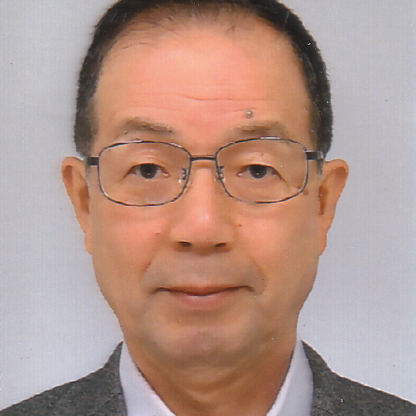
Professor Emeritus, Nara Women's University
Senior Researcher, KYOUSEI Science Center for Life and Nature
Miki, Kenju
Field of Expertise: Autonomic Physiology, Environmental Physiology, Cardiovascular Physiology
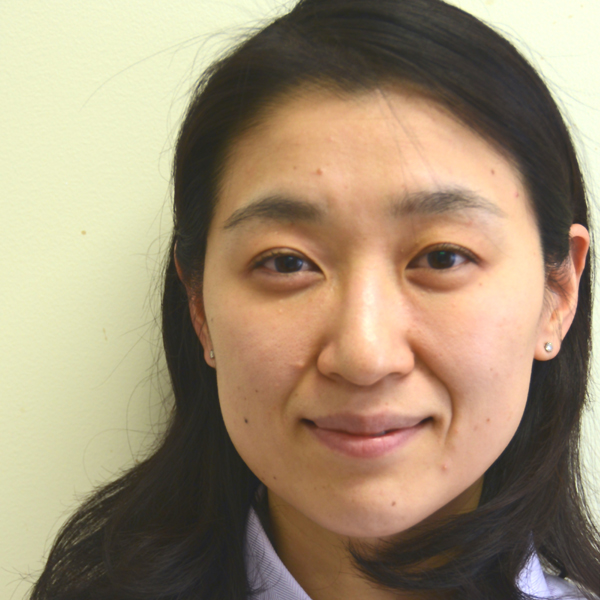
Professor
Department of Health Sciences, Course of Life and Health
Faculty of Human Life and Environment
Yoshimoto, Misa
Field of Expertise: Autonomic Physiology, Nutritional Physiology, Cardiovascular Physiology
Graduate School of Humanities and Sciences
[Graduate student]
Faculty of Human Life and Environment, Department of Health Sciences, Course of Life and Health
[third- and fourth-year undergraduate students]
Research Overview
Autonomic Regulation During Sleep, Exercise, and Hypertension
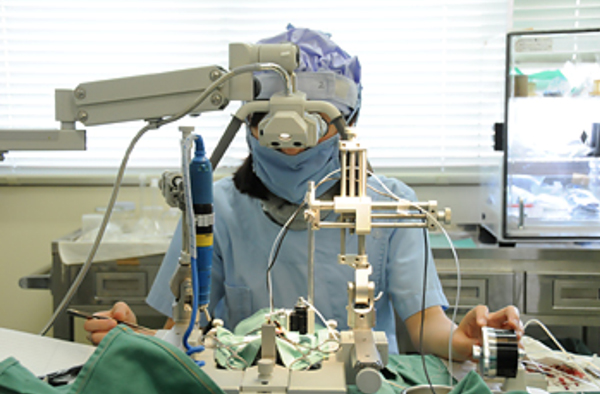 We study how the autonomic nervous system changes during sleep, exercise, and the development of hypertension, and how these changes regulate cardiovascular function.
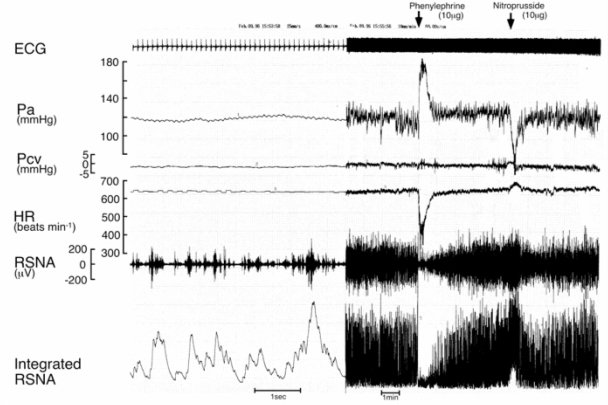
Using freely moving, conscious rats, we have established a unique method for long-term recording of sympathetic nerve activity. Our studies have shown that during REM sleep, sympathetic nerve activity and cardiovascular dynamics resemble those seen during wakefulness -- even without increased muscle activity -- indicating that higher brain centers can directly drive sympathetic output.
We have also examined how sympathetic nerve activity contributes to the transition from normal blood pressure to hypertension.
Organ Network Dynamics and Disease Prediction
 (JST Moonshot Goal 2)
We perform long-term, simultaneous recordings of vagal and sympathetic nerve activity in conscious rats to understand how the autonomic nervous system maintains glucose and energy homeostasis.
By continuously measuring nerve activity, heart rate, blood pressure, and blood glucose under unanesthetized conditions, we directly capture neural communication between organs over time.
In a type 1 diabetes model, we identified organ-specific autonomic responses during the development of hyperglycemia. These large-scale time-series data are now being integrated with mathematical modeling to develop predictive frameworks for early disease detection.
This work contributes to JST Moonshot Goal 2, which aims to enable ultra-early prediction and prevention of diabetes and related diseases by 2050.
Methods and Facilities
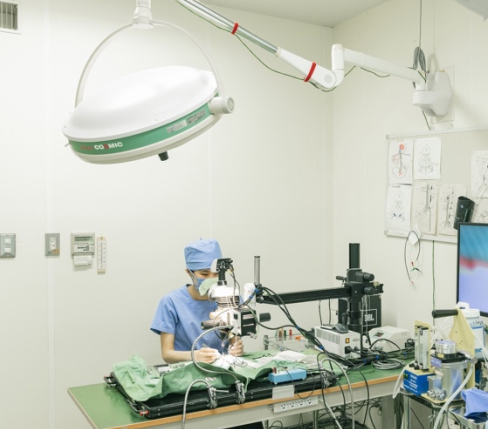
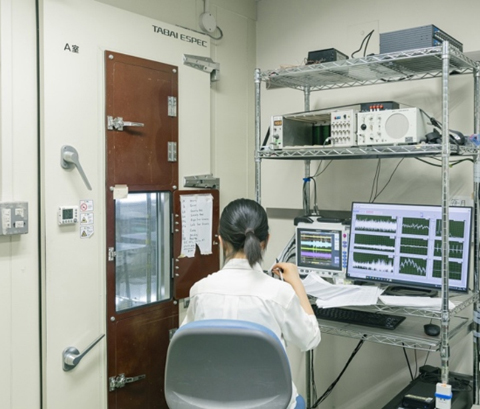 Our laboratory has established techniques for long-term recordings of renal and lumbar sympathetic nerve activity as well as cervical vagal nerve activity in conscious rats.
Stable recordings require advanced microsurgical skills, specialized instruments, and a carefully controlled experimental environment. Because autonomic nerve signals are extremely small (10-50 μV), experiments are conducted in shielded, temperature-controlled chambers with custom-designed amplifiers optimized for long-term, low-amplitude recordings.
Identification of nerve activity relies on both waveform analysis and auditory signal recognition, an essential skill in our laboratory.
Publications
- Yoshimoto M, Yagi K, Ikegame S, Miki K. Progressive Increase in Renal Sympathetic Nerve Activity Induced by Cold Exposure. Hypertension. 2025;82:615-623.
doi: 10.1161/HYPERTENSIONAHA.124.23499 - Miki K, Miyaura W, Ikegame S, Yoshimoto M. Method for measuring cervical vagal nerve activity in conscious rats. Am J Physiol Endocrinol Metab. 2025;328:E230-E241.
doi: 10.1152/ajpendo.00184.2024 - 池亀静香、三木健寿、吉本光佐. 恐怖記憶想起時の心拍数と交感神経活動の文脈依存的反応: 海馬 CA1 領域と視床下部室傍核の関与. 自律神経. 2025;62:123-127.
- 三木健寿、吉本光佐. 日常生活における交感神経活動による 動的な動脈圧調節 ―睡眠,運動から精神的ストレスまで. 医学のあゆみ. 2025;295:286-292.
- 吉本光佐、三木健寿. 運動による交感神経活動と動脈圧調節の変化. 自律神経. 2022;59:293-299.
- Miki K, Ikegame S, Yoshimoto M. Regional Differences in Sympathetic Nerve Activity Are Generated by Multiple Arterial Baroreflex Loops Arranged in Parallel. Frontiers in Physiology. 2022;13:1-8. doi: 10.3389/fphys.2022.858654
- Ikegame S, Yoshimoto M, Miki K. Simultaneous measurement of central amygdala neuronal activity and sympathetic nerve activity during daily activities in rats. Exp Physiol. 2022;107:1071-1080. doi: 10.1113/EP090538
- Kondo N, Yoshimoto M, Ikegame S, Miki K. Differential shifts in baroreflex control of renal and lumbar sympathetic nerve activity induced by freezing behaviour in rats.
Exp Physiol. 2021;106:2060-2069. doi: 10.1113/EP089742 - Yoshimoto M, Onishi Y, Mineyama N, Ikegame S, Shirai M, Osborn JW, Miki K. Renal and Lumbar Sympathetic Nerve Activity During Development of Hypertension in Dahl Salt-Sensitive Rats. Hypertension. 2019;74:888-895. doi: 10.1161/HYPERTENSIONAHA.119.12866
- Miki K, Yoshimoto M. Exercise-Induced Modulation of Baroreflex Control of Sympathetic Nerve Activity. Front Neurosci. 2018;12:493. doi: 10.3389/fnins.2018.00493
- Miki K, Yoshimoto M. Sympathetic nerve activity during sleep, exercise, and mental stress. Auton Neurosci. 2013;174:15-20. doi: 10.1016/j.autneu.2012.12.007
- Yoshimoto M, Yoshida I, Miki K. Functional role of diverse changes in sympathetic nerve activity in regulating arterial pressure during REM sleep. Sleep. 2011;34:1093-1101. doi: 10.5665/SLEEP.1168
For earlier publications and information on research funding, please refer to the links below:
Kenju Miki ► reseachmap (Publications)
Misa Yoshimoto ► reseachmap (Publications)